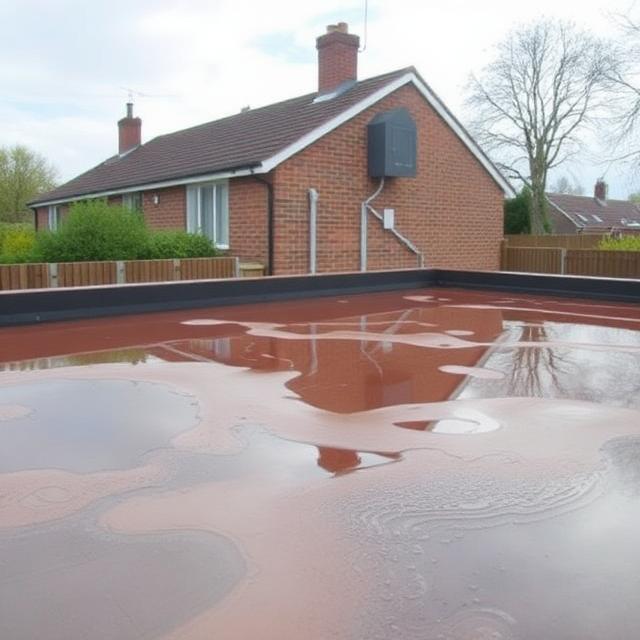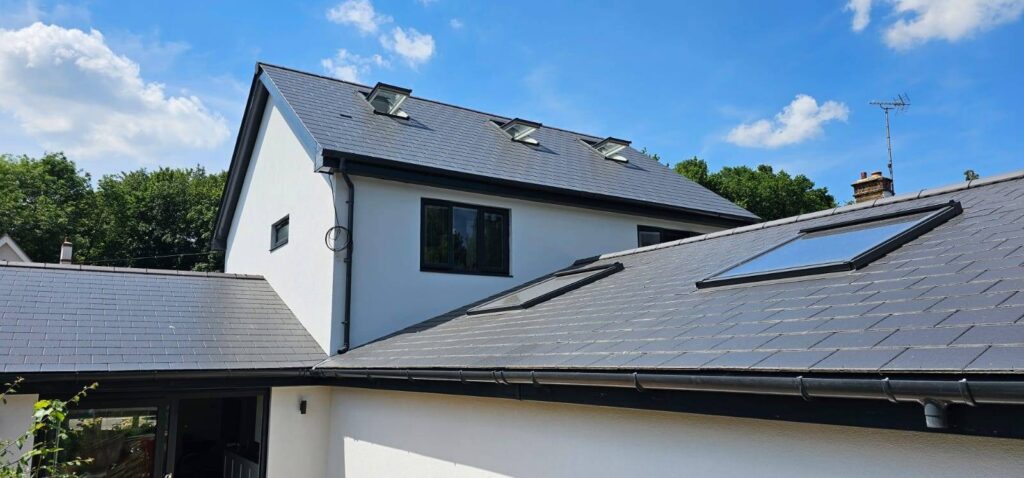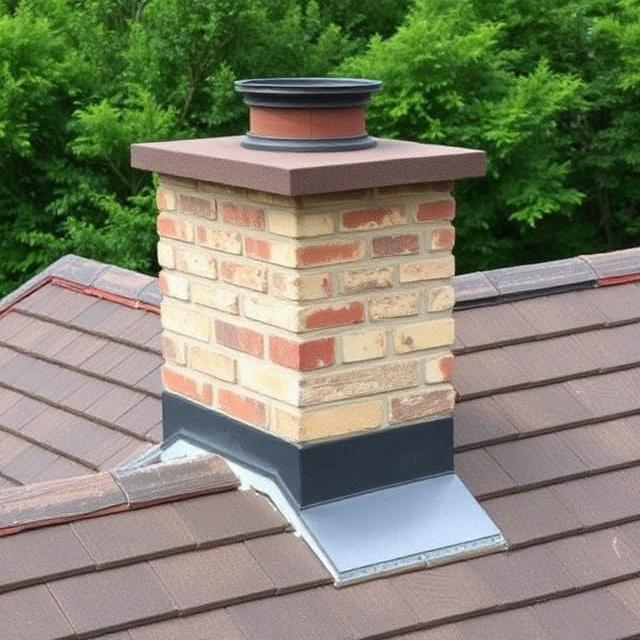

GRP coating is a fibreglass roof covering. GRP stands for Glass Reinforced Plastic: a resin that sets hard around a mat of glass fibres, making one waterproof layer with no joins. We fit GRP flat roofs across Stevenage and Hertfordshire, and every job starts with a free roof inspection.
This guide explains what GRP coating is, how it goes on, where it suits and where it does not, and how it compares with EPDM rubber and felt. If you have a flat roof that leaks, call us on 01438 222544 and we will come and look.
Written by the Roofers in Stevenage team, who fit and repair GRP, EPDM rubber and felt flat roofs across Stevenage and Hertfordshire. Published 3 November 2026.
What is GRP coating made of?
GRP coating is made of three things: resin, glass fibre matting and a topcoat. The resin is a liquid plastic that sets hard once it cures (dries and hardens through a chemical reaction). The glass fibre matting is a sheet of fine glass strands that gives the resin its strength, in the same way steel bars strengthen concrete. The topcoat is a final coloured layer that seals the surface and takes the weather. Once it has set, the three parts act as one solid sheet across the whole roof. That is why people also call it a fibreglass roof. Because it is laid wet and sets in place, there are no seams for water to find. It is the same family of material used to make boat hulls, which have to keep water out all day.
How is a GRP roof laid?
A GRP roof goes on in stages, and the weather has to be dry for each one. First the old covering is checked, and any rotten timber is replaced. A new deck goes down, usually boards fixed over the joists (the beams that hold the roof up). Then the edge trims are fitted around the sides of the roof. Next, resin is rolled onto the deck, the glass fibre mat is laid into it, and more resin is rolled through until the mat is soaked. This is called the laminate. When the laminate has cured, the topcoat goes on. Details such as upstands against walls, outlets and roof lights are formed in the same material, so the roof stays one piece. Rain on wet resin spoils it, so a good roofer watches the forecast and will not lay GRP in the wet.
Where does GRP coating suit a roof?
GRP suits flat roofs on extensions, garages, dormers, porches and bay windows. It works well on smaller roofs with awkward shapes, because the resin can be shaped around corners, roof lights and pipes without joins. It is also used on balconies and roof areas that need a firm, hard finish. Many homeowners choose GRP for an extension because it gives a neat, smooth finish that looks clean from an upstairs window. GRP is less suited to a roof that moves a lot, such as an old timber deck that flexes, because hard resin can crack if the structure underneath shifts. That is one reason we inspect the roof before we suggest any material. Sometimes the right answer is a different covering, or a repair to what is already there.
GRP, EPDM or felt: how do they compare?
We fit all three main flat roof coverings, so we can talk you through them without pushing one. The table gives the main differences.
| Covering | What it is | How it is laid | Good to know |
|---|---|---|---|
| GRP (fibreglass) | Resin and glass fibre mat with a topcoat | Laid wet and sets into one hard sheet | No seams, hard finish, needs dry weather to lay |
| EPDM rubber | A synthetic rubber membrane | Laid as a sheet and bonded to the deck | Flexible, often one sheet on a simple roof |
| Felt (torch-on) | Layers of bitumen felt, often 3-layer | Layers are heated and bonded on | Traditional, often used on garages and sheds |
There is no single best covering for every roof. The choice depends on the roof’s size and shape, what it is used for, the state of the deck underneath and your budget. You can read more in our guide to roofing materials for flat roofs.
Can a GRP roof be repaired?
Yes, a GRP roof can often be repaired rather than replaced. A crack or a damaged patch can be cleaned back, sanded and laid over with new resin and matting, then topcoated. Leaks on GRP roofs often start at the edges, around trims, upstands or a roof light, rather than in the middle of the roof. Water can also sit on a flat roof that has sagged, and over time that puts strain on any covering. Our article on water on a flat roof explains why that happens. We will never talk you into a new roof if a small repair will do. After the inspection, we tell you honestly whether your roof needs a repair or a replacement, and why. If you are weighing it up, our guide on roof repair or replacement may help.
How do we price a GRP roof?
We price a GRP roof after a free inspection, not before. The cost depends on the size of the roof, the state of the deck underneath, how many details there are, such as roof lights and upstands, and how easy the roof is to reach. A roof with a sound deck costs less to cover than one where rotten boards need replacing first. Our process has three steps. First, we inspect your roof for free, and we send you photos and videos of the problem on WhatsApp. Second, we give you a price based on what we found. Third, we carry out the repair or replacement. You see what we see before you decide, so you are never paying for work you cannot picture. See our flat roof installation page for more on the work we do.
Questions homeowners ask about GRP coating
Is GRP the same as fibreglass roofing?
Yes. GRP stands for Glass Reinforced Plastic, and it is the material most people call a fibreglass roof.
Can GRP be laid over my old felt roof?
It depends on the state of the roof underneath. GRP needs a sound, dry deck, so we check the old covering and the boards at the inspection before we recommend anything.
Do you offer free inspections?
Yes, every job starts with a free roof inspection. We send you photos and videos of the problem on WhatsApp so you can see it for yourself.
Can you fix a small leak on a GRP roof?
Often, yes. Small cracks and edge leaks on GRP can usually be repaired with new resin and matting, and we will tell you if a repair is enough.
Which areas do you cover?
We are based at 87 Longfields, Stevenage, SG2 8QA. We cover Stevenage, Hitchin, Letchworth, Baldock, Knebworth, Welwyn Garden City, Hertford, Ware, St Albans, Datchworth and Tewin.
For a free inspection of your flat roof, call Roofers in Stevenage on 01438 222544 or use our contact page. Emergency call-outs are answered 24 hours a day.
The team at Roofers in Stevenage